Seafood · One serving
Air Fryer Salmon and Asparagus for One
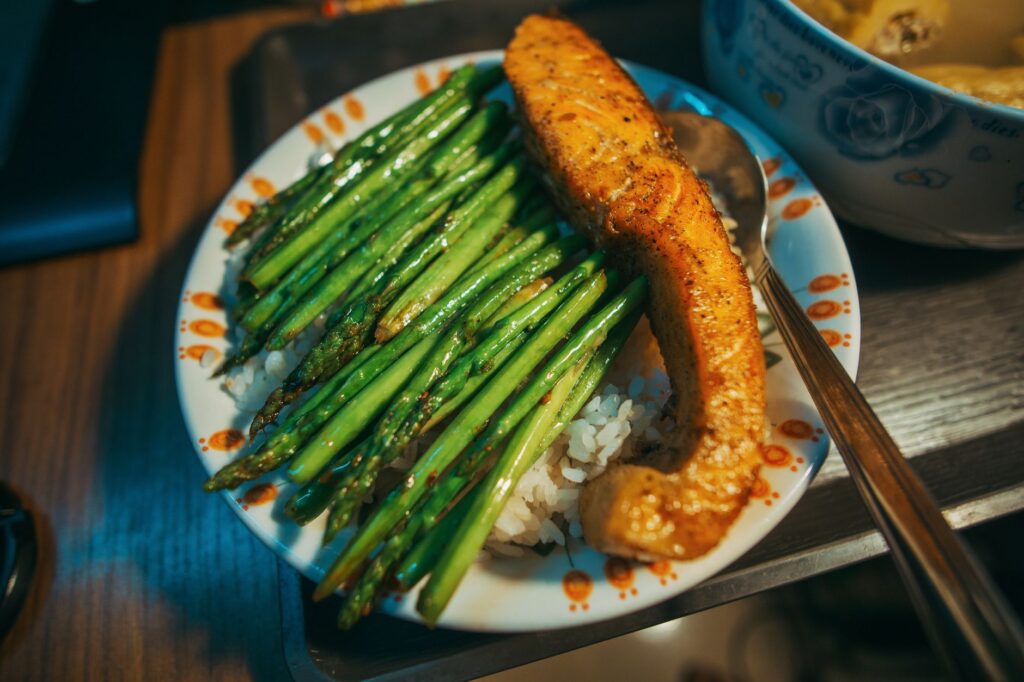
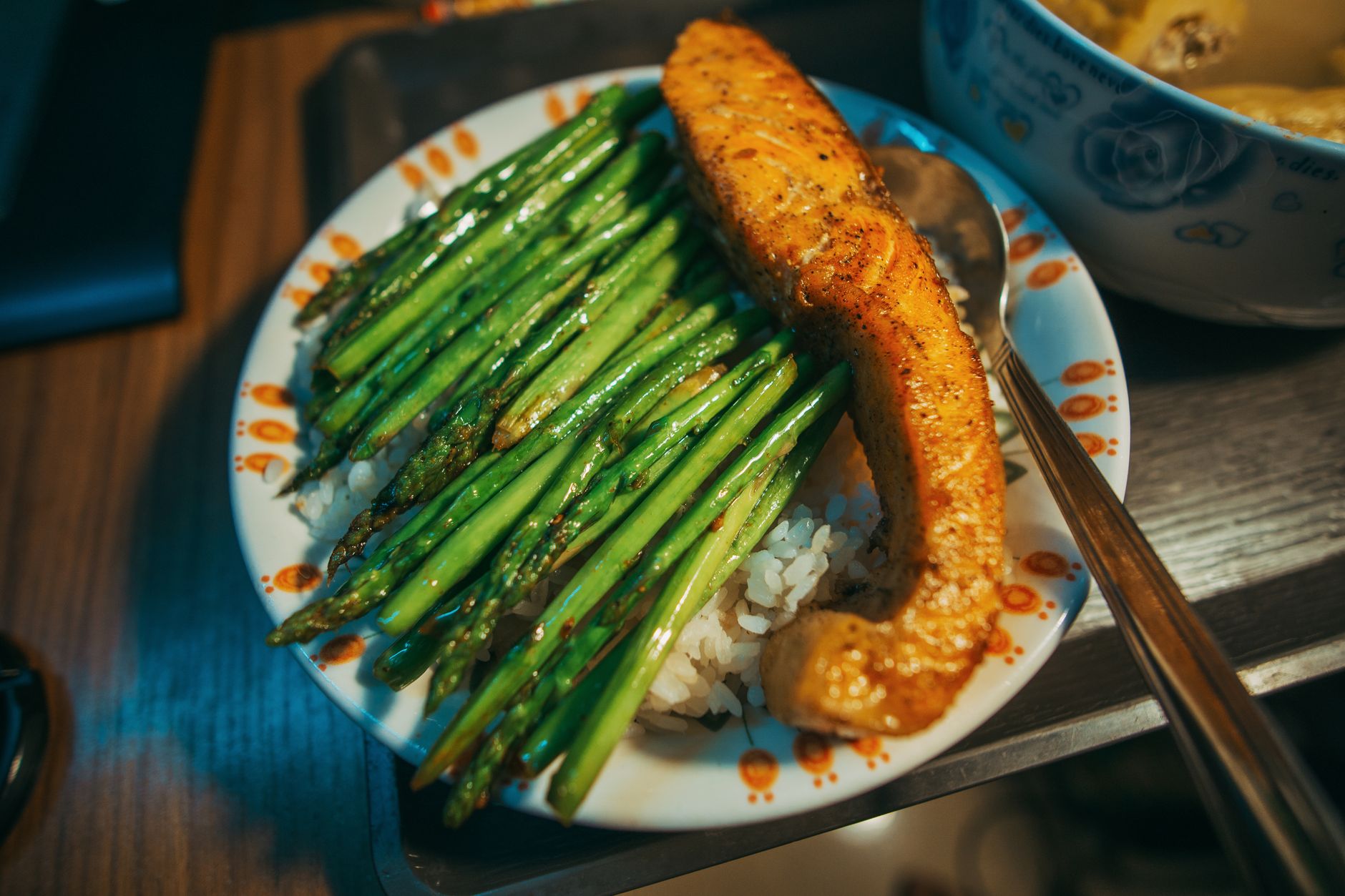
Air fryer salmon and asparagus for one makes a fish-and-vegetable dinner without a second pan. This version uses the same basket in two stages: cook the asparagus, set it on a clean plate, then cook one salmon fillet. That order lets you check each food separately and keeps the cooked vegetables away from raw fish juices. Finish with lemon. The cooking times are estimates, and the fish needs a thermometer check rather than a fixed countdown.
Why make air fryer salmon and asparagus for one?
Salmon needs a safe internal temperature; asparagus needs a fork check at the thick end. Separate stages let you adjust either one without stacking the food or needing a second drawer.
This is a staged one-basket method, not a promise that everything cooks together in ten minutes. If you only want the fish, use air fryer salmon for one. The separate asparagus recipe covers the vegetable on its own.
Choose a fillet and spears that fit
Use a fresh or fully thawed fillet about 1 inch thick. A wide, flat piece cooks differently from a narrow, thick one, even at the same weight. Thaw in the refrigerator, keep chilled and pat dry before cooking.
Choose firm asparagus with closed tips. Trim tough bases, rinse and dry. Medium spears are easier to manage than pencil-thin ones, whose tips dry quickly. Shorten long stalks to fit the basket.
Keep lemon juice for the plate. Spread the dry seasoning with a little oil, without leaving a puddle. Use plain garlic powder, not a compound sauce.
Keep the fish moist and the tips from burning
Start checking early, especially with a thin tail piece. A golden surface is not a temperature reading. USDA air-fryer guidance specifies 145°F (63°C) for fish. If the outside darkens before the center is ready, lower the setting to 350°F (175°C) and continue checking; keep cooking until the thermometer confirms the safe target.
For asparagus, test a thick stalk rather than the tip. Stop cooking when the base is tender enough for you. If the basket cannot hold the spears loosely, cook batches instead of piling them under the fish. Keep loose parchment out of an empty preheating basket and follow your appliance's loading instructions.
Storage and a larger batch
Refrigerate saved food in a shallow covered container within 2 hours, or within 1 hour above 90°F (32°C). Keep at 40°F (4°C) or below and use cooked seafood within 3–4 days, following USDA seafood guidance. Reheat leftovers to 165°F (74°C); the fish and asparagus may soften or dry further.
For two people, double the ingredients only if each stage fits without crowding; otherwise cook batches. Do not double the time. Check differently sized fillets separately.
Frequently asked questions
Can I cook the salmon and asparagus at the same time?
This recipe uses two stages so doneness and spacing can be checked separately. Do not move the cooked asparagus back beside raw or partly cooked fish. The optional warming step comes after the fish reaches its safe temperature and leaves the basket.
Can I use frozen salmon?
Use fully thawed salmon for these estimates. A frozen fillet needs a different schedule, and asparagus cannot be used as a timer for the fish. Thaw safely in the refrigerator rather than on the counter.
Do I need to flip the salmon?
No. Place it skin side down when applicable. Lift with a fish turner rather than pulling at it with tongs, and check the center temperature.
Air Fryer Salmon and Asparagus for One
Ingredients
Equipment
Method
- Prepare the asparagus before handling raw fish. Trim, rinse and dry it. Preheat to 375°F (190°C) if the appliance requires it. Toss the spears with 1 teaspoon olive oil and half the garlic powder, salt and pepper. Arrange in a loose layer.
- Air fry the asparagus for an estimated 6–9 minutes, turning at about 3 minutes and checking at 5 minutes. When a fork enters the thick end with slight resistance, transfer all the asparagus to a clean plate and loosely cover. Remove it before adding any raw fish.
- Pat the fully thawed salmon dry. Brush with the remaining 1 teaspoon oil and add the remaining seasoning. Keep the raw-fish board and utensils away from cooked vegetables; wash hands and equipment after raw-fish handling.
- Put the fillet in the now-empty basket, skin side down if applicable. Cook at 375°F (190°C) for an estimated 8–12 minutes, checking from 7 minutes. No flip is needed. Insert a clean thermometer from the side into the thickest center, without touching the basket.
- Continue in short intervals until the salmon reaches 145°F (63°C). If the outside darkens early, lower to 350°F (175°C) and continue to the safe target. Transfer with a clean turner to the serving plate. Only after the safely cooked fish is removed, warm the asparagus in the basket for about 1–2 minutes if needed, watching the tips.
- Add the fresh lemon juice to the fish and vegetables. The whole fillet and all the measured asparagus make one serving. Estimated combined cooking is 14–21 minutes, or 15–23 minutes including optional warming; preheating is extra.
Notes
Photo by FOX via Pexels.
Keep cooking
Something else for your table
Air Fryer Tuna Melt for One
Air fryer tuna melt for one makes one hot sandwich with drained tuna and cheddar. Get exact…
Air Fryer Cod for One
Air fryer cod for one cooks one mild fish fillet with lemon, paprika, and a crisp edge…
Air Fryer Salmon For One
Air fryer salmon for one gives you a flaky single fillet in about 10 minutes, with simple…